Tuesday, 5 May 2009

Car hire in Sheffield on the increase due to credit crunch

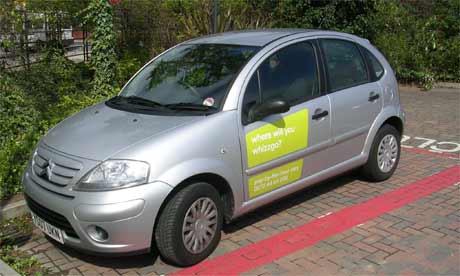
A pay-as-you-go car hire company has seen a boost in rental numbers since the world's economy took a turn for the worst.


WhizzGo car hire operates in Sheffield and has seen a rise in business due to a public bid to save money and the environment.

Liz Gray, Area manager of the company said: "The credit crunch has made more people, businesses and residents, aware of their outgoings, and look for places that they could save money. The increased oil prices, especially before Christmas, added to this affect.

"We are therefore seeing an increase, month on month, in the number of people joining WhizzGo, as they like the service for the cost saving it can offer."

The company operates a non contact system where customers pay for a low emission vehicle by the hour. The card style key and pin number used to start the car, is purchased via telephone or the web.

In total there are eight designated hire spaces in the city and customers simply return their vehicle to the parking bay when their time is up. Hourly rates start from £5.99 depending on the model of the vehicle.

Firstly, customers have to register to become a member, and then they can choose the cars location and the time duration. Although a lot of private members use the service, 50% of WhizzGo's custom comes from businesses.

Yet the firm believes that its increase in members is down to environmental awareness, as congestion and pollution are increasing across city centres and the average car is used for just 7% of the time.

"The increase has been aided by the financial situation, but recognition of car clubs, and their growth, would have happened organically regardless.

"Using WhizzGo gives all the freedom associated with a private car, but with far fewer costs, much more convenience and far less damage to the environment."


Alternatively fuelled vehicles are also something that the company want to introduce to the fleet as well as integrating their transport with the councils public transport services.

The council offer a car sharing regime where the public can register online to find others that they may be able to car share with.

Duncan McIntyre, Workplace Travel Plan Officer for the council thinks that it is a more realistic option for commuters who live in rural areas. He said: "Car sharing saves money while allowing the flexibility of the car journey. One more car off the road is good for congestion and the environment and is a foot in the door in terms of travel behaviour change.

In response to teaming up with WhizzGo to provide integrated public transport, McIntyre said: "That's very much a 'depends'. That kind of thing is something we would consider but it wouldn't necessarily be WhizzGo that we would do it with."


Image aquired from: http://static.guim.co.uk/sys-images/Money/Pix/pictures/2007/11/08/WhizzGoC.jpg

Council announce £21 million will be spent on the environment

This week Sheffield City Council announced £25 million of tax payers' money will be spent on cleaning up the environment.


The new Liberal Democrat manifesto aims to increase recycling opportunities in Sheffield this year to make it ‘A City of Opportunity’.


Councillor Shaffaq Mohammed, Cabinet Member for Climate Change and the Local Environment said:

“The waste management team are currently writing a new waste strategy for the City and this will include delivering our commitment of more recycling. We anticipate a new kerbside recycling service will be introduced to most households in the by the end of next year.”


Currently Sheffield City Council provide blue bins for paper and card recycling for every household, which are collected once a month. But there are still a number of households that are not in blue bin collection places, such as difficult to reach rural areas and some of the city centre, including student accommodation.


Councillor Mohammed said that the council’s budget of £25 million will not stretch to providing the recycling services in these areas.


“There are currently no plans to make this service 100% coverage as the costs of doing this are disproportionate. The guidance from government is that where it is difficult to provide separate recycling services, including on the basis of cost the local authority may opt not to provide a service.”


Christine Bell, a final year Sports Science student at Sheffield Hallam University thinks that the recycling bins in student areas would benefit the environment greatly. She said:
“We should definitely have it. If you think about it, students’ halls of residents throw out dozens of glass bottles and waste paper from assignments.


"I remember in my first year at my halls of residents we took out three or four black bin bags full of bottles. We didn’t think to recycle them because we didn’t know where to take them.


“I don't have a car so it makes it difficult to get to a recycling centre so if we did have those blue bins we'd be throwing out a lot less rubbish as you can only fit a limited amount of stuff in those black bins. We'd be able to fit twice the amount of rubbish in there whilst recycling half of it."


The council do provide free green sacks for garden waste that they collect, which have been a success, with over 200,000 collected. Yet this is still only a third of them used, but councillor Mohammed remains optimistic. He said: "Perhaps the spring weather will see this change. "


Monday, 4 May 2009

A man arrested for car theft

A young Sheffield man was arrested for allegedly assaulting a man when trying to break into his car.


The court was told how Norman Mused, 19, of Darnall Sheffield, appeared at Magistrates Court when he pleaded guilty to robbery on 23 January after breaking into a man's car.


He tried to remove the CD player before reaching to the dashboard and taking £25. The man whose car it was rushed over to stop him, the claimant who preferred not to be named told police how Mused started to punch him in the head and pulled out a hammer and thrust it towards him.


The robbery took place near Kirby Close junction. Mused was arrested on 13th March after a complaint was made by the claimant.


Defending solicitor Mr Swaybe said: "He does have the right to bail."
Mused will be remanded in custody until his next hearing at Sheffield Crown Court on 8th July.


The trial continues.

Diana Wallis- Yorkshire and Humberside MEP


Diana Wallis is the only Liberal Democrat to represent Yorkshire and Humberside in the European Parliament. She is also the first Liberal Democrat and the first female to be elected as a vice president of the European Parliament in twenty years.
Diana is taking part in the London Marathon in April to raise money for a charity for Endometriosis. Since Diana has suffered from the disease in the past, her aim is to raise more money for research. She has taken time out of training to talk to me about the race and her battle against endometriosis.


You have been training for the London Marathon, how have you found time to train since you are based in Brussels?

It is very difficult. In fact, it is virtually impossible given the lifestyle that we lead. The parliament works on a four week cycle, which means two weeks of committee meetings in Brussels and then one week of political group week and then the Strasbourg week. So that means we are travelling every week and in between that, there is all sorts of other little journeys for talks and conferences. So training is not easy, I try doing it when I’m at home. You have to do long runs at weekends, which is part of my way of relaxing. I don’t do as much as I probably need though, I shall get round but it’s a question of how long it takes me!

How important is doing the London Marathon to you?

I am running it for a charity to do with an illness that I feel very strongly about called Endometriosis. It affects around 1 in 10 women and I was unfortunate to suffer from it in my thirties. It is extremely painful. For me, it was brought to an end in my early thirties when I had a full hysterectomy which meant that I couldn’t have a family. As a consequence, I could say that politics has become my baby. It is a horrible disease.. Gradually, as I felt more comfortable in talking about my own personal experience, I have tried to do something on a European level to try and raise more awareness about it.

Have you run the marathon before?

I have, I ran it once before about 3 years ago, and I did it in 5 hours 26 minutes. I want to try and do it in less than 5 hours this time. This time, I am doing it during an election year, which isn’t ideal but there we go!

Do you think there is more awareness about Endometriosis now, compared to when you suffered from it?


It’s a lot better than when I had it. I can remember going to a series of probably 4 consultants over a period of six years, who told me variously that I had other conditions, one even told me I was pregnant, which I knew I couldn’t be. Lots of women have been through this process, it is now easier to diagnose and there is more written about it in women’s magazines. I read an article in Cosmopolitan, and I remember going hot and cold and thinking “this is what I’ve got!” and then I found a female GP who was far more sympathetic. This was such a relief because very often, you are turned away and told that you just have bad period pains.

What advice would you have for women who may be suffering from Endometriosis?

Make sure you kick up a fuss! Don’t be frightened to keep asking questions if you don’t get answered straight away. It is a very difficult thing to talk about but the more we talk about things like this, the more aware we become. I think the problem is that it is very difficult to convey just how horrible this disease is. I read an article in a local newspaper about a young woman who had suffered from it and in the picture of her she looking very smiley and happy, there was nothing that showed there was something obviously wrong with her. It is so easy to down play it and say “oh, it’s just period pains!”, but it’s a lot worse than that.


Fact Box

Endometriosis
Endometriosis is a painful condition which occurs when the cells that usually line a woman’s womb develop in other parts of her body, such as the vagina, fallopian tubes, ovaries, bladder, bowel and the rectum
Endometriosis cells work in the same way as those that line the womb. Each month during the menstrual cycle, the womb lining break down and bleeds if pregnancy hasn’t occurred. Endometriosis cells go through the same process but it cannot leave the body. This causes swelling and extreme pain wherever the cells are in the body.

Laura Newton

The UK, A Nation of Teenage Pregnancies


Teenage pregnancies have been a hot topic in the past few months. The nation was shocked to hear that once again, teenage pregnancies are on the increase. So it begs the question, where are we going wrong?

Statistics show that the UK had the highest number of teenage pregnancies in Western Europe and is only second to The United States, according to figures from the World Health Organisation.

It was reported that The Committee of Advertising Practise is about to start a three month consultation into whether advertisements for condoms and abortion clinics should be shown before watershed on television and radio.

The plans have come about after the shocking statistics were announced, in a bid to help the situation. Efforts are even more essential after it was reported that teenagers are turning to internet pornography in order to answer their queries about sex. As a result, more children are having unprotected sex at an earlier age.

It has been argued that the main cause of teenage pregnancies in the UK is down to the lack of sex education provided in schools.

A secondary school teacher from Nottingham said: “I think the primary responsibility for sex and relationship education lies with parents, but as with all things this has to be a partnership between home, school, and the health and welfare agencies.”

“Part of the reason why some teenagers are missing out on key education and information could be because these parties don’t communicate as effectively as they could – schools and parents don’t discuss sex education, and healthcare and social care professionals don’t talk to schools (and vice versa) as much as they should.”
Hayley Wells 21, from Nottingham had her first child at the age of 16, she said: “I was in a relationship at the time and had been sexually active for a while, my daughter wasn’t planned and when I found out it all seemed a bit surreal.”

“You never think it is going to happen to you, and I admit, we were careless about using protection. Sex education was not widely taught in school. The majority of what you learn is in biology, rather than lessons specifically on sex education.”

Government plant to make sex education a compulsory part of the national curriculum in primary and secondary schools by 2010, meaning children will learn more about relationships, contraception and the meaning of sex.

It will be also being made compulsory in Faith schools, allowing teachers to adapt their teaching to their own beliefs. Parents will also get the legal right to withdraw children from the classes if they wish to do so.

Hayley said: “I definitely think sex education should be taught more in schools. I think kids are completely oblivious to how much having a baby changes your life. I was only 16 and I suddenly had to grow up and become responsible. I missed out on the things that normal teenagers get up to, because I had a baby to look after. I wouldn’t change my daughter for the world, but if I could turn back time, I would have had her later on in life.”
Picture taken from Google Image
Laura Newton

Monday, 6 April 2009

'Two Lipsticks and a Lover' By Helena Frith Powell


“Unlock your inner French woman. A witty investigation into the styles, lusts and secrets of French women.” Two Lipsticks and a Lover.

One woman who reveals the hidden secrets about European women and their indispensable wardrobe and beauty tips.

Helena Frith Powell unleashes the essence of France and the lustrous women in the novel ‘Two Lipsticks and a Lover’.

Helena Frith Powell 44, is a travel and lifestyle journalist who has her own French Mistress column in The Sunday Times, The Guardian and Daily Mail. Her first book Two Lipsticks and a Lover, was published in October 2005. Poonam Vadher talks to Helena to find out about the inner essence of becoming a successful writer.

Where do you get your inspirations from to write these classy novels?
I’m not sure you can call them classy! But my inspiration for them has come from my surroundings and my past. Living in France was hugely inspirational and my unusual childhood gave me a lot of material for my memoir Ciao Bella. At the moment I am working on my first novel, which is set in France.

Did you always want to be a writer?
Pretty much from the age of about nine, before that I wanted to be a vet for wild animals because they have no one to look after them. Also an actress (or rather a film star) and a writer.

I am currently reading ‘Two Lipsticks and a Lover’, do you think that British women are more carefree about their appearances then French women?
I think British women are more carefree because there is not such a heavy emphasis on looking good in England.

You travel a lot, name one place you visited and what did you like about it?
Oh help! I think one of my most favourite trips was to Port Cros just off the French coast near Toulon. It is like a little paradise on earth with no cars, the children played on the beach while my husband and I drank rose and ate grilled fish.

What made you move to Abu Dhabi?
It was a dream job, staff writer for a magazine and also the idea of an adventure.

Are you planning on writing any more books? If so what is it about?
I am working on a novel at the moment, but have just finished a diet book which will be published in May. One day I will write a book about my experiences here.

How did you gain the information?
I write mainly about what I live through and also the experiences of my friends.

Who is your idol and why?
Aung San Suu Kyi, the opposition leader in Burma. She is beautiful and has dedicated her life to a cause. She is the most selfless woman I can think of, as well as intelligent, elegant and brave. And throughout it all she wears a flower in her hair – a very French attitude!

What type of genres interest you?

All kinds really, I just interviewed the Swedish crime writer Henning Mankell and so read some thrillers for the first time ever. I like anything that is well written but have to say my favourite book always was and remains Wuthering Heights.

You have written a lot about different women in different countries and their culture, if you could choose one of these cultures to live in which one would you choose e.g. France, Italy …?
France I think, much as I love Italy and England and all sorts of other places. The French know how to live and I admire their passion for fashion, human rights and beauty. I also think France is the most beautiful country in the world and it has just about everything you could ever want from life; mountains, sea, Paris, champagne and culture.

You focus on women in your books. What interests you about the female gender and why?
I find women endlessly fascinating; and I think I enjoy writing about them partly in an effort to better understand myself. I love the fact that as a woman you have so many roles in life; mother, lover, friend, mistress (not everyone obviously!), wife, sister, career woman – all these roles we somehow manage to juggle and fill. Women’s capacity to achieve things never ceases to amaze me.

To find out more information on Helena Frith Powell and her novels, log onto her very own website: http://helenafrithpowell.com/

Saturday, 28 March 2009

Journalism lecturer gets a taste of India for prospective students

Sue Featherstone, Principle lecturer in Journalism at Sheffield Hallam University, tells us all about her first trip to Mumbai, India and did it really spice up her.

P. What was the purpose of your trip?
S. Well the main reason for my trip was to meet some prospective students in Delhi.

P. Why did you go and meet the students?
S. I didn’t realise this until I went but Sheffield Hallam University attracts more students from the Indian subcontinent than any other university. They have about 500 students which is an awful lot of people, and one of the ways in which students apply to come to Hallam is through an agency in India. So regularly people from he university go out there and interview the students to make sure if there suitable, because there’s a discrepancy between the students and their understanding of what were looking for. For instance we had a student who wanted to do a marketing course but he didn’t have the two year management work experience, which you really need to have. So therefore we were able to counsel him and suggested that he followed an alternative course.

P. what can you tell us about India as it was your first trip there?
S. It’s amazing and interesting as I was listening to a piece on the radio this morning about Disraeli who was the British prime minister in the 19th Century and he wrote a novel in which he talks about England being split into two nations and that neither of the nations ever meet or know anything about each other. The nations he talks about are poor and wealthy and this struck me as it’s so true of India. As there are two different worlds, where I would describe a normal everyday doings and then you see the poor poverty areas and this is a binding memory of that culture.
The people are so nice and such good fun. I did a lecture with some students at an all female University in Delhi, and the students were so lovely and bubbly. They knew awful lot about the subject and contributed well as it was the first time they had met me, it felt like I built a relationship with them just as I do with all my students back here. I found these women to be confident and it was such fun working with them.

P. What would you have done differently if you had the chance to it all over again? S. Well as it was a heavy working trip and I only got one afternoon off for a few hours that’s when I was able to do any shopping. So this woman called Sudha who works for the Delhi office, she took me to this outside market. I saw the traditional Indian suits called salwar kameez, I was really tempted to buy one but I didn’t have enough money on me to buy the suit or some earrings for my daughters. At the end I brought some earrings for them but the eldest doesn’t like the pair I chose for her so now I have a pair of earrings. But I really regret the fact I didn’t buy the Indian suit, so the next time I do go if I get the chance I will definitely buy at least two or three suits.

P. How did the Indian culture differ from the British culture?
S.
I think the biggest cultural difference is the driving, the roads are absolutely chaotic. It reminds me of that big square in France where the drivers would just hurdle in there, and that’s what it's exactly like in India. The drivers don’t even look in their wing mirrors they just use their horns all the time. Where we have three lanes for traffic they have six lanes, it's crazy.
Over there everyone uses scooters to get around and it was fascinating to see because you would see a woman sitting behind but like side ways and she would have one hand on the mans shoulder and a bag shopping and sometimes you would see a child sitting on her lap.

P. Did you enjoy the taste of the Indian curries?
S.
I have to confess to only having one Indian curry the whole time I was there, the reason being because the very first day I was there and when I got to the Delhi office they insisted on buying me lunch. So they got some food from a take out and it looked really nice and tasty, but the first thing I saw was a long black strand of hair and I said to myself “come on this is India just get on with it”. The rest of the time I was eating something from the buffet and the hotel makes UK and American style breakfast. I didn’t experiment at all which is sad really but then again I am not really into curries as I find them too spicy so wasn’t missing much on the food side.

P. Are the tuition fees for post graduates more expensive for international students than the UK students?
S. Yes there very expensive I think it's double the price of what post graduates pay here. But I was talking to this man who was on the plane with me to Delhi, he said that the competition in India because the size of the population is just immense. That you have to fight for everything which proberly reflects on the way they drive, fighting for a space to get their car in. He mentioned that’s why students go abroad to study for better education as it is difficult to get into good schools and it’s all because of the size of the population. However I would love to go back.

P. Did you pick up on any Hindi whilst you were there?
S. Not really, one of the things I notice is that there really respectable, there was this Indian reporter who worked for the English language newspaper and he kept calling me ma'am. He would say “what did you think of this ma'am?” I thought I’m not old enough to be ma'am but I did think it was sweet of him.